
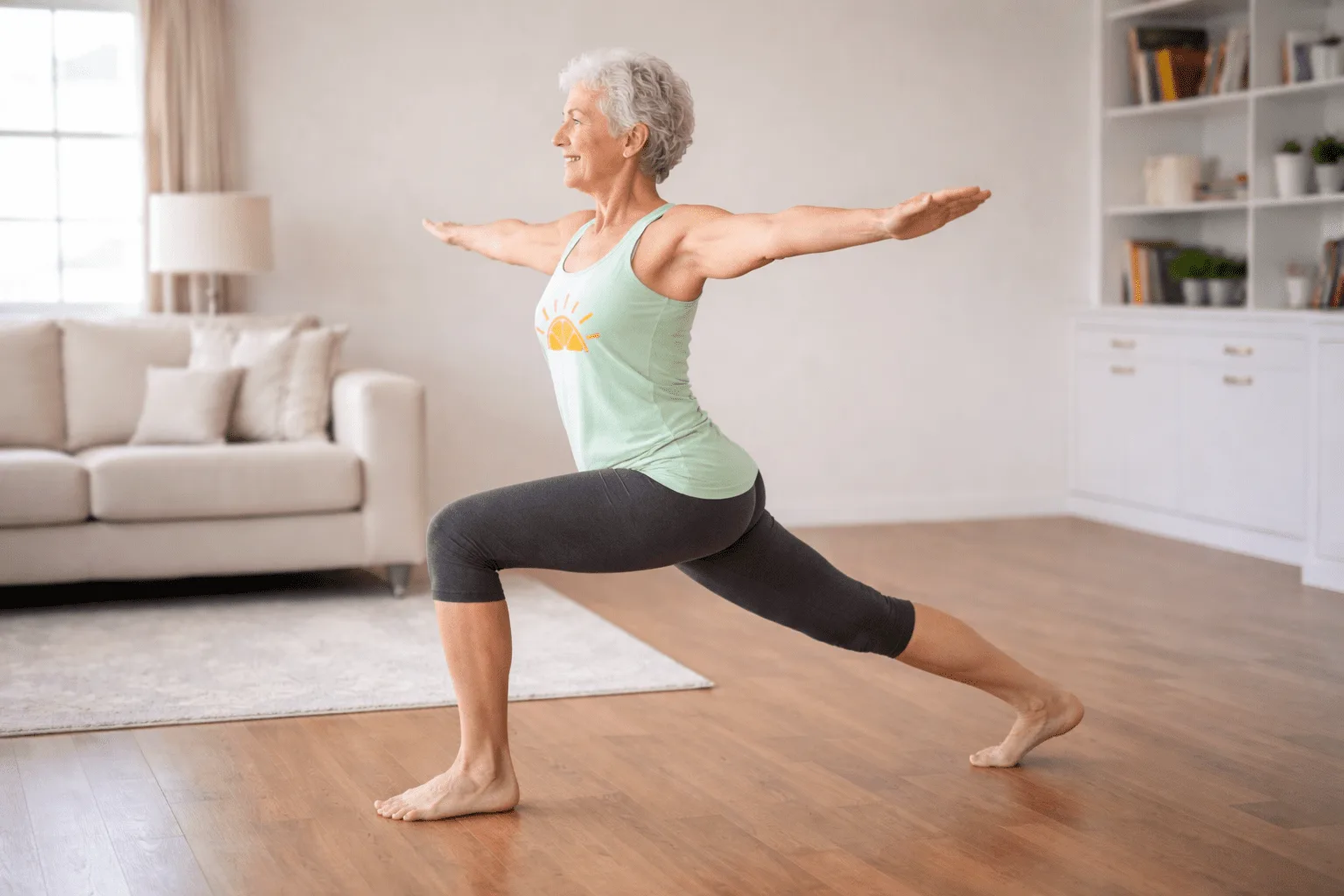
Balance naturally declines with age, often becoming noticeable in our 50s and accelerating after 65, increasing fall risks. This happens due to reduced muscle strength, vision changes, slower inner-ear signals, and reduced proprioception (joint awareness).
However, there are simple steps that you can take to noticeably improve your balance.
Here’s a 7-day exercise plan to improve balance for people aged 50+, focusing on bodyweight exercises that can be done at home without any equipment.
Remember, listen to your body and build up your number of repititions over a period of time if you are just starting out. This is not a race, we want to gently improve your balance over a period of time. Stick to the plan and you will soon feel a difference.
7-Day Plan to Improve Balance for People Aged 50+
Day 1: Foundation of Balance
1. Heel-to-Toe Walk
- How to do it:
- Stand tall with your feet together.
- Step forward with one foot, placing the heel of the front foot directly in front of the toes of the back foot.
- Take 10-15 steps, then turn around and repeat.
- Repeat 2 times (or build up to this over 3-4 weeks)
- How it improves balance:
- This exercise challenges your ability to walk in a straight line, requiring control and stability with each step. It helps strengthen the muscles in your feet and legs, improving your ability to stabilize your body.
2. Standing March
- How to do it:
- Stand with your feet hip-width apart and engage your core.
- Lift one knee to hip height and lower it back down.
- Alternate legs and repeat for 1 minute.
- Repeat 2 times (or build up to this over 3-4 weeks)
- How it improves balance:
- It works on your hip flexors and core while also engaging your balance system. By lifting your knee to hip height, you challenge your body’s ability to stay steady while on one leg.
Day 2: Strengthen Core and Legs
1. Single-Leg Stand
- How to do it:
- Stand tall with your feet together.
- Lift one leg off the ground, holding the position for 10-15 seconds.
- Try and suck your belly button in and hold it as you do this – it will engage your core
- Switch to the other leg.
- Try to increase the time you can hold each leg up as you progress.
- Repeat 2 times (or build up to this over 3-4 weeks)
- How it improves balance:
- This simple exercise forces your body to stabilize on one leg, which strengthens the ankle and leg muscles, and improves proprioception (awareness of body position).
2. Standing Leg Lifts
- How to do it:
- Stand tall and place your hands on your hips for stability.
- Lift one leg out to the side and hold for a count of 3-5 seconds, then return to standing.
- Try and suck your belly button in and hold it as you do this – it will engage your core
- Alternate legs for 10-15 repetitions per side.
- Repeat 2 times (or build up to this over 3-4 weeks)
- How it improves balance:
- Strengthens the outer thigh and hip muscles, which are key to maintaining balance. The lateral movement helps challenge your body’s ability to stabilize in different directions.
Day 3: Flexibility and Stability
1. Chair Pose (Wall Sit)
- How to do it:
- Stand with your back against a wall and slide down until your knees form a 90-degree angle, like sitting in a chair.
- Hold for 15-30 seconds, then stand up and rest.
- Repeat 2 times (or build up to this over 3-4 weeks)
- How it improves balance:
- Strengthens your legs and core, providing a solid foundation for better balance. Holding this pose engages muscles that help stabilize the body, especially the knees and hips.
2. Heel Raises
- How to do it:
- Stand with your feet hip-width apart.
- Slowly rise up onto your toes, hold for 1-2 seconds, and then lower back down.
- Repeat for 10-15 repetitions.
- Repeat 2 times (or build up to this over 3-4 weeks)
- How it improves balance:
- Heel raises strengthen the calves and improve ankle stability. This is crucial for maintaining balance when standing and walking, particularly when adjusting to uneven surfaces.
Day 4: Dynamic Movement
1. Step-Touch
- How to do it:
- Stand with your feet together.
- Step to the side with your right foot, then bring your left foot to meet it.
- Step to the left with your left foot, then bring your right foot to meet it.
- Repeat for 1 minute.
- Repeat 2 times (or build up to this over 3-4 weeks)
- How it improves balance:
- This lateral movement challenges your balance while promoting coordination. It helps with maintaining control as you move side to side, which is important for navigating different environments.
2. Leg Swings
- How to do it:
- Stand with your feet hip-width apart and hold onto a sturdy surface (e.g., a chair or countertop) for balance.
- Swing one leg forward and backward, keeping your torso upright.
- Perform 10-15 swings per leg.
- Repeat 2 times (or build up to this over 3-4 weeks)
- How it improves balance:
- Leg swings help improve hip flexibility and stability. This dynamic movement trains your body to control balance while in motion, which is essential for better coordination and movement control.
Day 5: Core Stability
1. Standing Bicycle Crunches
- How to do it:
- Stand with feet shoulder-width apart and place your hands behind your head.
- Bring your right knee toward your left elbow while twisting your torso to the left, then return to starting position.
- Alternate sides for 30 seconds to 1 minute.
- Repeat 2 times (or build up to this over 3-4 weeks)
- How it improves balance:
- This exercise engages your core muscles, improving your ability to stabilize your upper and lower body while balancing.
2. Side Leg Raises
- How to do it:
- Lie on one side, propped up on your elbow with your legs straight.
- Lift your top leg to hip height, hold for a second, and lower it back down.
- Perform 10-15 repetitions, then switch sides.
- Repeat 2 times (or build up to this over 3-4 weeks)
- How it improves balance:
- Side leg raises strengthen the hip abductors, which are essential for stability when standing and walking. They also target the muscles that help you stay upright and balanced.
Day 6: Functional Movement
1. Wall Push-Ups
- How to do it:
- Stand facing a wall, placing your hands on it at shoulder height.
- Bend your elbows and lower your body toward the wall, then push back to the starting position.
- Perform 10-15 repetitions.
- Repeat 2 times (or build up to this over 3-4 weeks)
- How it improves balance:
- Wall push-ups engage the core and upper body, which are essential for maintaining a steady posture while standing and moving.
2. Squats
- How to do it:
- Stand with your feet shoulder-width apart and your toes pointing slightly outward.
- Lower your body by bending your knees, as if you are going to sit in a chair.
- Keep your chest up and back straight as you lower down. Return to standing.
- Perform 10-15 repetitions.
- How it improves balance:
- Squats strengthen the lower body, particularly the thighs, glutes, and calves, which are essential for maintaining stability and balance when standing, walking, or climbing stairs.
Day 7: Mobility and Flexibility
1. Toe Taps
- How to do it:
- Stand tall with feet hip-width apart.
- Tap the toes of your right foot in front of you, then to the side, and then behind you, tapping the floor lightly.
- Repeat with the left foot, performing 10-15 taps per side.
- How it improves balance:
- This exercise helps to increase foot and ankle mobility while engaging your core for stability. It promotes body awareness and balance control through movement in multiple directions.
2. Forward Lunge
- How to do it:
- Stand with your feet hip-width apart.
- Step forward with your right foot, lowering your body into a lunge position. Keep your knee in line with your toes.
- Push back to the starting position.
- Alternate legs for 10-15 repetitions.
- How it improves balance:
- Lunges target the legs and core, helping improve strength and control in the lower body. They also require balance while moving, which builds functional stability and coordination.
Tips for Success
- Consistency is key: Try to perform these exercises every day for maximum benefit. Don’t stop after 7 days – repeat the program each week
- Focus on posture: Engage your core throughout each exercise to maintain stability. You can enagage your core by sucking your belly button in towards your spine.
- Progress slowly: Start with shorter timings and just one repitition if you need to and increase as you gain strength and confidence.